
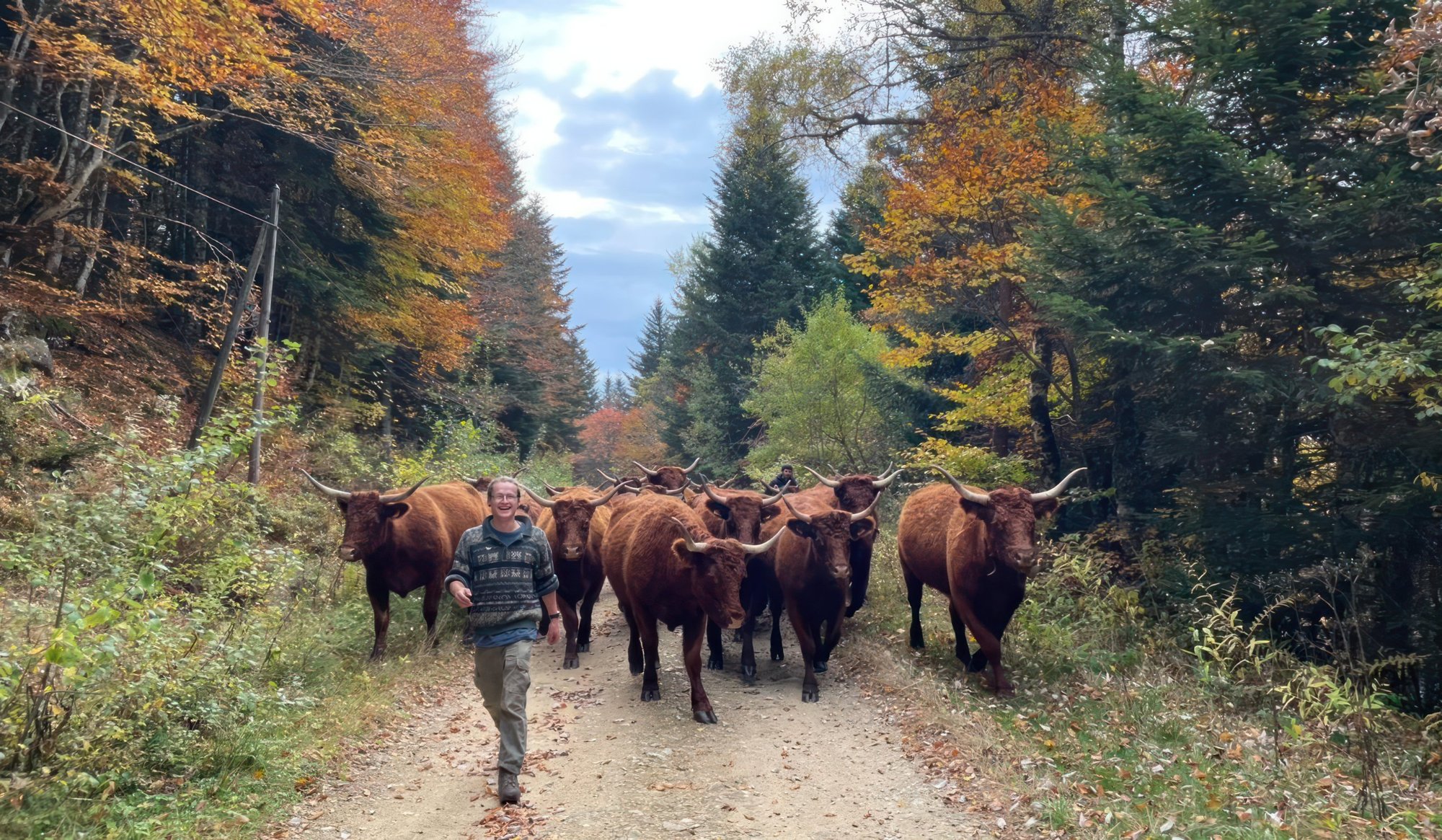
 Photo by A. Duboismenu
Don’t let France erase 30,000 community lands
International expression of solidarity against proposed law threatening more than 30,000 commons
Update · 4 November 2026
The Senate debated Proposition de loi no. 782 on 3 November and closed the debate the same day. A majority of senators approved the bill, which now goes to the National Assembly for examination and a vote. The Senate’s discussion focused on simplifying the law and reducing conflicts over the sections de commune. In our view, this “simplification” will weaken the rights of the rights holders (ayants droit), even though existing law already provides all the tools needed to manage these lands. Many sections de commune have their own governing bodies (the commissions syndicales), on which the mayor sits. The bill, on the other hand, would shift decision-making power to the town hall alone, encouraging the dissolution of these commons — a direction the law has been taking for 200 years. In particular, the bill would allow land to be taken out of the section and placed under the direct authority of the municipality, making it easier to sell or develop. Local farmers would then lose their priority access, and communities would see their livelihoods, traditions and identity diminished. Our coalition will remain mobilised to defend these commons, and we will keep you informed of the next steps.
26 October 2026
The French government is currently debating whether to abolish sections de commune, an important type of commons or territory of Local Communities in France. Starting November 3, 2026, the French Senate will discuss Law Proposal 782, which seeks to dissolve more than 30,000 ‘sections de commune’ in mainland France. While they are not the only type of commons in France, and others include consortages, olhak, prud’homies de pêche, écluses à poissons, canaux d’irrigation, and marais, the ‘sections de commune’ are the most numerous and geographically widespread. These territories are governed by communities that are deeply interconnected through hundreds of years of sustainable farming, pastoralism, forestry, hunting, gathering, and water governance. They prioritize local management, giving residents first access to natural resources, who in turn, care directly for these resources which are critical for their livelihoods. These lands and their historical buildings also provide recreational, touristic, environmental, social, and economic services.
By contrast, the emerging urban commons in many French cities, are seen as vibrant and contributing to society. And commons are promoted internationally by the French Development Agency. For the rural commons, the discourse is very different: since the 19th century, the French government has claimed that Local Community lands are old-fashioned and poorly managed, using this to justify “modernization.” On this basis, it has slowly eroded Local Communities’ rights to their traditional lands in a process called “commons-grabbing.”
The 2013 legal reform followed the same reasoning: believing it had found the ultimate solution, the state removed self-governance from most of these community territories and handed the responsibility to the municipalities, while the communities retained user rights and land tenure. No rights-holders were consulted. This approach failed. Conflicts with municipalities increased, as they no longer had Local Community representatives and assemblies with whom to discuss the management of their natural resources and territories. It also led to the permanent transfer of many sections de commune to the municipalities, after which the land could be built on, sold, or converted to other uses, including industrial agriculture and forestry.
The proposed law to be debated 3rd November 2026 continues to describe these commons as “outdated systems, the management and very existence of which are no longer appropriate”, while it provides no evidence to support these statements. The proposed law encourages state-led commons-grabbing, by “transferring” community lands to the municipalities, encouraged by a tax levy.
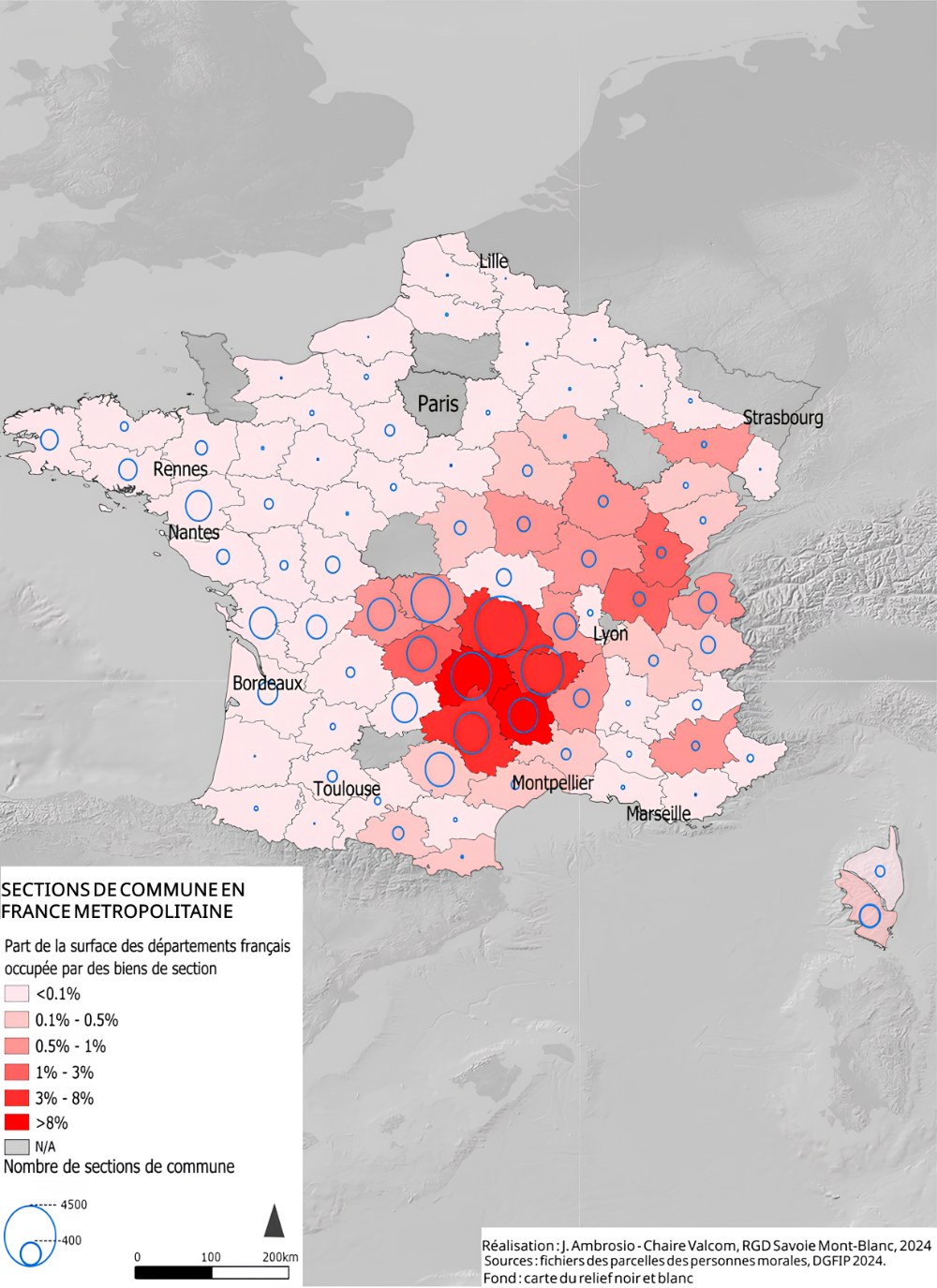
Law Proposal 782 seeks to:
- Impose a tax on each right-holder, explicitly encouraging them to give up their rights.
- Expand the powers of municipal councils to dispossess communities of their lands.
- Make self-governance harder for the largest sections de commune by significantly increasing the territory size threshold that qualifies legally for self-governance (and so has a right to a governance body).
Warning: If this law passes, the same methods could be used to remove the rights of other communities, namely through the removal of governance, the levying of special taxes, and the facilitation of the municipalization of land (commons-grabbing).
For more information on why sections de commune important to maintain and how other European countries legally recognize and support similar local community territories, please consult the ICCA Consortium Alert.
Call to Action addressed to the government of France
- Consult all rights-holders about the future of their sections de commune before debating the proposed law, in line with the international norm of free, prior, and informed consent (FPIC).
- Commission independent studies on the sections de commune so that law proposals rely on scientific evidence rather than repeating unsupported and unempirical claims that have been made for over 200 years, stating that these territories are “old-fashioned and serve no purpose.” This logic was debunked by the Nobel Prize-winning research of Elinor Ostrom and her colleagues.
- Assess the economic costs the state would take on if 30,000+ sections de commune became entirely government-managed instead of community-managed that imply little to no cost to the public treasury.
- Assess the environmental impact of transferring 30,000+ sections de commune to the municipalities.
- Consider the implications of this law for France’s ability to comply with the Kunming-Montreal Global Biodiversity Framework (KM-GBF).
- Consider the implications and lost potential for implementing the European Union’s (EU) Nature Restoration Law, Biodiversity strategy and the Farm to Fork strategy in a truly participative and community-based manner.
- Consider the impact of the loss of sections de commune on future generations.
- Change the law to promote these territories as places of social cohesion, intergenerational transmission, local democracy, biodiversity conservation, climate change mitigation and a wide range of other services and important for local livelihoods and society at large.
Endorsement by organizations
By endorsing these demands, organizations across the world can play a pivotal role in holding the French government accountable for its actions. We call on governments, international human rights organizations, and the global public to stand in solidarity with French local communities in their struggle for land justice.
Signatory organisations
197 organisations have signed this letter
National commons organisations
- Community Land Scotland (United Kingdom)
- Association de défense des droits des habitants des communautés villageoises et des sections de commune Dite AFASC (France)
- Union des Communautés de Prud’hommes Pêcheurs de Méditerranée (France)
- ZDRUŽENJE PREDSTAVNIKOV AGRARNIH SKUPNOSTI SLOVENIJE (ZPASS) (Slovenia)
- BALADI – Federação Nacional de Baldios (Portugal)
- Fédération suisse des bourgeoisies et corporations (FSBC) (Switzerland)
- Federazione Nazionale Domini Collettivi P. Grossi e P. Nervi (Italy)
- Iniciativa Comunales (Spain)
- NFCFPA (Albania)
Other signatory organisations
- 350PDX (United States)
- ABJU (Switzerland)
- ABSG (Portugal)
- Acal-AZUL (Morocco)
- ACEB ASSOC PARA A COOPERAÇAO ENTRE BALDIOS (Portugal)
- AcTe (Spain)
- Adabio (France)
- Addufu (France)
- ADNA (France)
- Agrarna skupnost Golac (Slovenia)
- Agrecol e.V. (Germany)
- Agritad (Portugal)
- Agrupamento de Baldios da Serra do Gerês (Portugal)
- AGS Global Consulting (Montenegro)
- AguiarFloresta (Portugal)
- Aktion Agrar e.V. (Germany)
- Alleanza friulana Domini collettivi (Italy)
- AMAN MALUKU (Indonesia)
- AMIS DE LA JUSTICE ASBL (DR Congo)
- Anima Mundi, A.C. (Mexico)
- Antenna Fondation (Switzerland)
- APCRM (Senegal)
- Arab Agronomists Association (Palestine)
- Asia Indigenous Peoples Network on Extractive Industries and Energy (AIPNEE) (Philippines)
- Associació Recerca i Decreixement (Spain)
- Association bernoise des communes et corporations bourgeoises (Switzerland)
- Association Biom BirdLife Croatia (Croatia)
- Association Couleur Forêt (France)
- Association Culturelle des Villages de Retournac (ACVR) (France)
- Association des Bourgeoisies du Jura Bernois (Switzerland)
- Association for Farmers Rights Defense, AFRD (Georgia)
- Association for Nature, Environment and Sustainable Development Sunce (Croatia)
- Association gestionnaire de la réserve naturelle d’Eyne (France)
- Association Hyla (Croatia)
- Association Orilan (France)
- Association Paul K. Feyerabend (Switzerland)
- Association pour Aucelon (DRÔME) (France)
- Association Relier (France)
- Associazione Italiana dei Territori di Vita (Italy)
- Associação de Criadores do Maronês (Portugal)
- B.A.Balex (France)
- Baldios Cepos e Casal Novo (Portugal)
- Baldios da Esculca (Portugal)
- Baldios de Ansiães (Portugal)
- Biophilia (France)
- Bosque, Lda (Portugal)
- Bourgeoisie de Berne (Switzerland)
- Bourgeoisie de Porrentruy (Switzerland)
- Brod Ecological Society-BED (Croatia)
- Burgergemeinde Bern (Switzerland)
- Burgergemeinde Bönigen (Switzerland)
- Cambas Rojas (France)
- CAPA Strategies (United States)
- Casal da Bouça Sociedade Agropecuária Lda (Portugal)
- CFPPA Ariège-Comminges (France)
- Civic initiative Save Sinjajevina (Montenegro)
- CLB Freguesia de São Miguel de Poiares (Portugal)
- CMVMC (Spain)
- CMVMC San Paio dos Pitos (Spain)
- CNA (Portugal)
- CNVP Kosovo (Kosovo)
- COALITION AGAINST LAND GRABBING (CALG) (Italy)
- COBALCO – ASSOCIAÇAO BALDIOS DISTRITO COIMBRA (Portugal)
- Coexiscience (France)
- Colectivo Agroecológico del Ecuador (Ecuador)
- Collectif de Races Locales de Montagne (France)
- Collectif pour une société des communs (France)
- Commission Syndicale “Ailloux et Autres” (France)
- Common Ground (Spain)
- Common Ground Lab (United Kingdom)
- Commons Institut e.V. (Germany)
- Commons lab vzw (Belgium)
- Commons-Atelier “Silke Helfrich” (Germany)
- Communautique (Canada)
- Comunanza Agrarna skupnost 30 Jusov Srenj in Trieste/Trst (I) (Italy)
- Comunidad de Estudios JAINA (Bolivia)
- Comunidad de Regantes de las regaderas Concejo y Rollar (Spain)
- Comunidade de Montes de Couso (Spain)
- Comunidade Local dos Baldios da Ermida (Portugal)
- Comunidade Local dos Baldios da Esculca (Portugal)
- Confédération paysanne (France)
- Convivial Conservation Coalition (Netherlands)
- Cooperativa Mula (Portugal)
- CUT-UP doo (Montenegro)
- Dadugba Farmers Cooperative (Sierra Leone)
- DigitAsso (France)
- Disi women cooperative (Jordan)
- DITSL (Germany)
- društvo/association LIMES a.p. (Slovenia)
- Earth Focus Foundation (Switzerland)
- Ecoloxistas Galicia Atlántica e Verde (Spain)
- Endorois Welfare Council (Kenya)
- Environmental Protection and Development Association (EPDA) (Cameroon)
- Estudios Rurales y Asesoría Campesina (Mexico)
- Eurodoc (France)
- Fauna et Flora (France)
- Forum interjurassien des Bourgeoisies (Switzerland)
- Fundación Entretantos (Spain)
- Fundación Montescola (Spain)
- Fédération des Bourgeoisies valaisannes (Switzerland)
- Garants de la Forêt de Miaune (France)
- Global Diversity Foundation (United Kingdom)
- Gnovis/Novice/Nachrichten/News La Vicìnia (Italy)
- Golden Compass (Switzerland)
- Green Cameroon (Cameroon)
- Gret (France)
- HEART Rural Development Society (Bangladesh)
- Hellenic Ornithological Society/BirdLife Greece (Greece)
- ICCA Consortium (Italy)
- Inspeyered e.V. (Germany)
- Institute ZRNO (Slovenia)
- International Association for the Study of the Commons (IASC) (Global)
- International Center for Community Land Trusts (United States)
- International Center for the Advancement of Pastoral Systems (ICAPS) (United States)
- International Land Coalition (Global)
- International Livestock Research Institute (Ethiopia)
- IYRP (Pakistan)
- Join for Water (Benin)
- Jus Barkovlje (Italy)
- Jus comunella di Malchina (Italy)
- Jus Medjevas (Italy)
- Jus Nabresina Gemeinde (Italy)
- Jus Občina Mavhinje (Italy)
- JUS Prosek (Italy)
- Jus Trebče-La Comune di Trebich (Italy)
- Jus Vrh Comune catastale di Vrh San Michele (Italy)
- Korporation Schwendi (Switzerland)
- La Coop des Communs (France)
- Laboratoire juridique européen d’entraide pour les communs (France)
- Land Rights Now (Global)
- Lentamente Cooperativa (Italy)
- Les Mijotées (France)
- LIBERA ASSOCIAZIONI NOMI E NUMERI CONTRO LE MAFIE (Italy)
- LIPPSD (Ligue des Pédagogues pour la Paix, la Socialisation et le Developpement) (DR Congo)
- Lo Fournio (France)
- LTCO (France)
- L’Hermitage, domaine rural (France)
- Mazconsulting (France)
- MONUMENTA (Greece)
- Morecambe Bay Conservation Grazing Co. (United Kingdom)
- Mother Earth Sustainable Agricultural Association MESAA-Africa (Cameroon)
- Mouvement Plan A (France)
- Musée valaisan des Bisses (Switzerland)
- Nsombou Abalghe-Dzal Association (NADA) (Gabon)
- Observatorio para una Cultura del Territorio (Spain)
- OCCN asbl (DR Congo)
- Open Spaces Society (United Kingdom)
- PAKISAMA (Philippines)
- Pasto-Arabic (Morocco)
- PHILOMETIS (France)
- Plateau Perspectives (United Kingdom)
- Plenty Canada (Canada)
- Prud’homie des patrons pêcheurs de Palavas-les-Flots (France)
- Prud’homie La Seyne-sur-Mer (France)
- Public institution for Culture (Montenegro)
- Quercus Sonora (Spain)
- Rachel Carson Center for Environment and Society (Germany)
- RENOV ECO (France)
- REON (Greece)
- RHE Initiative (Portugal)
- Ruwwad Organisation for Empowerment and Development (Palestine)
- Save Sinjajevina (Montenegro)
- Sačuvajmo Sinjajevinu (Serbia)
- Schola Campesina (Italy)
- Section de commune de Mourex (France)
- Société des Communs (France)
- Somos Comuneras (Spain)
- Syndicat de la montagne limousine (France)
- Terra Sylvestris (Greece)
- TerraCoLab (Spain)
- The Grassroots Institute (Canada)
- The Grassroots Institute Western Balkans (Montenegro)
- Udruga Zelena Istra (Croatia)
- UITC (France)
- Unadel (France)
- Urban Gorillas (Cyprus)
- Usnea RP (Spain)
- Vall de Can Masdeu (Spain)
- Verband Luzerner Korporationen (Switzerland)
- Vereinigung der Nidwaldner Korporationen (Switzerland)
- Veterinaria Ligada al Territorio (Spain)
- Vivre ensemble à Sagnes (France)
- Vivre La Rue (France)
- Vétérinaires Sans Frontières Belgium (Belgium)
- WFP Croatia – Women in Farming – national group Croatia (Croatia)
- Wolfram Edukacija (Montenegro)
- Wool and Shepherding advocacy (Netherlands)
- ZMAG (Croatia)
In Solidarity with French Commons #landrightsnow