

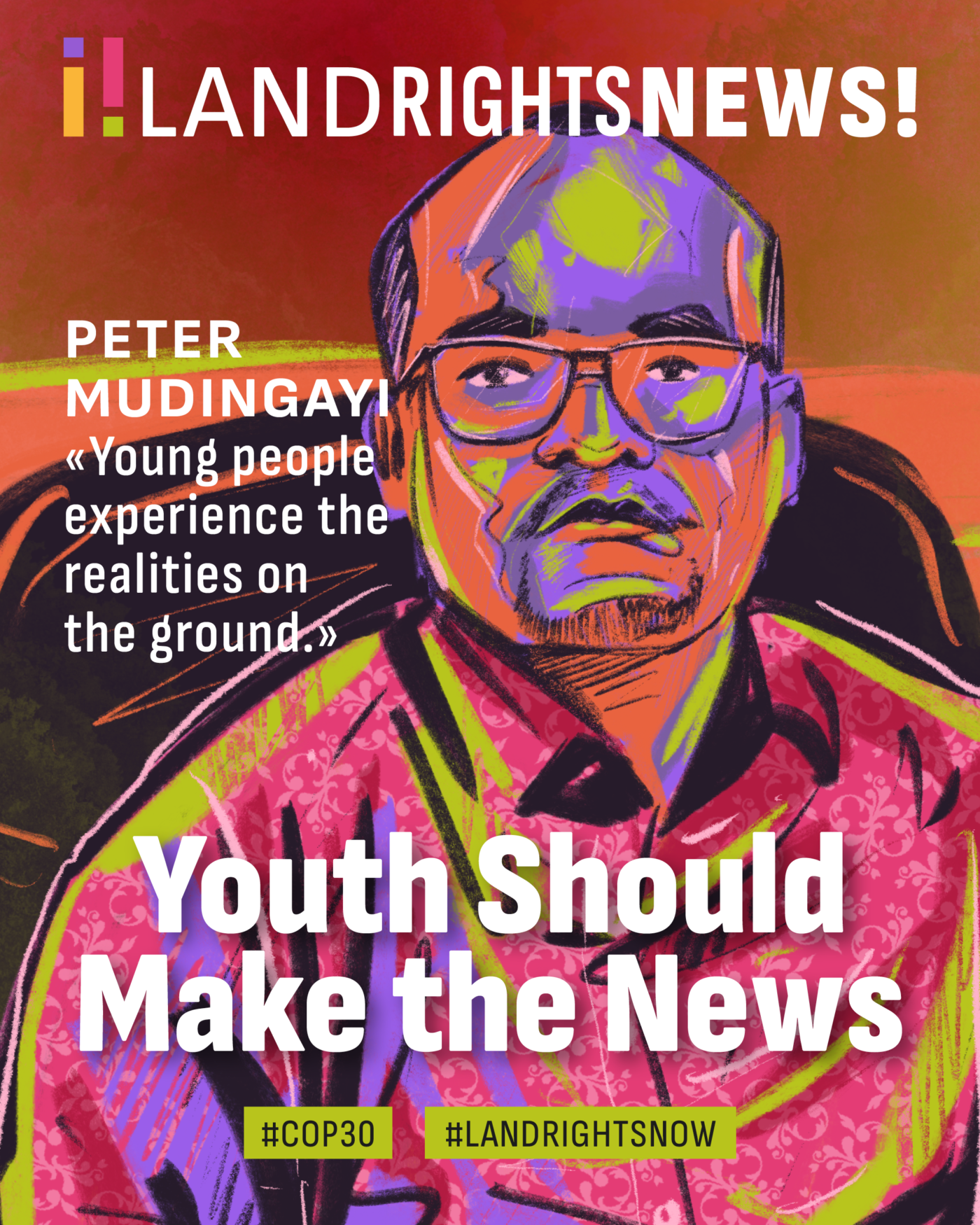
“My fight is to make visible the voice of the voiceless”
Young land rights and climate justice advocate in the Democratic Republic of Congo
“I am the voice of those who are not heard, those who do not have the possibility to speak or to be listened to.”
At just 25 years old, Peter Mudingayi carries a responsibility many would find overwhelming. Based in Kinshasa, the capital of the Democratic Republic of Congo (DRC), Peter is both a lawyer and a programme assistant at YILAA – Youth Initiative for Land in Africa. His daily work sits at the intersection of land rights, good governance, and climate justice, with a strong focus on marginalized communities.
Standing up for land rights and dignity
Peter’s activism focuses primarily on the land rights of indigenous peoples and local communities, who are often denied the freedom to access, use, and govern their own territories.
“I advocate for the land rights of indigenous peoples and local communities who are often deprived of the freedom to access their lands,” he explains. “My role is to carry their voices to the authorities and relevant institutions, to denounce the injustices they suffer and to promote their rights.”
In many parts of the DRC, land isn’t just a resource; it is deeply connected to identity, culture, survival, and future generations. When communities lose access to their territories, they lose far more than soil: they lose autonomy, food security, and the capacity to build a dignified life.
Land, freedom and climate justice
For Peter, questions of land and territory are inseparable from climate justice.
“In Africa, and particularly in the DRC, the rights of women and local communities remain very marginalized,” he says. “We are fighting for real democracy, equality of expression, and fair access to natural resources.”
Listening to communities is not just a moral imperative—it’s also essential for effective climate action. Those who live closest to forests, rivers, and land are the first to experience environmental destruction, including deforestation, pollution, land grabbing, and displacement.
Peter sees his mission as a bridge-builder.
I take their needs into account and strive to carry them to the concerned authorities. That is one of the essential aspects of my commitment.
Climate justice, in his view, cannot exist without territorial justice and the meaningful participation of the people most affected.
Bringing youth voices to global spaces
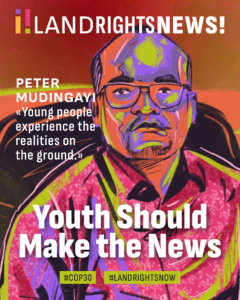
Asked what his message is for international gatherings like cop, Peter is clear: “My request is that the voice of young people be truly heard. Young people are living the realities that others only discuss in reports and meetings.”
“They see up close the injustice, poverty, and destruction of the environment. Authorities must listen to what we say and understand the real needs of the population.”
Peter also insists that women must be at the center of solutions.
“I advocate for women, who are often marginalized and not educated, to be supported. The exclusion of women impoverishes the whole society.”
For him, youth and women are not just “stakeholders”; they are key actors in building just and sustainable futures.
YILAA
 YILAA (Youth Initiative for Land in Africa) is a pan-african organization that works for climate justice, good land governance, and youth participation in decision-making processes.
“We work in several African countries to give a voice to those who are not heard, what we call ‘the voice of the voiceless’”
Peter focuses his efforts on the DRC, especially in conflict-affected areas in the east of the country, where war and displacement have devastating impacts on daily life. In these regions, children are unable to attend school, infrastructure is destroyed, and entire communities lose their homes and land.
But marginalization is not limited to remote or rural areas. Even in Kinshasa, in neighbourhoods like Menkao, many people live excluded from basic services and opportunities.
“With YILAA, we advocate for their development, their education, and their social inclusion,”
Peter has been working with the organization since 2022, and, as he notes with pride, most members of the organization are young people.
A life of activism
Peter’s commitment is deeply personal. He was born in Mbuji-Mayi, in the kasaï oriental province of the DRC. Growing up, he experienced hardship firsthand.
“From my childhood, I knew very difficult living conditions. These experiences inspired and motivated me to defend today those who suffer from injustice.”
His early life shaped his sense of responsibility and his understanding of what it means to be excluded. The inequalities he witnessed are now the fuel for his activism.
“I am the voice of those who are not heard, those who do not have the possibility to express themselves or to be listened to,” he says. “My struggle is to make visible the voice of the voiceless.”
Peter’s story is not just about one young activist in Kinshasa; it is a call to listen differently. It is a call to listen to communities who have been living with environmental destruction long before it becomes a global headline, to women whose exclusion weakens entire societies, and to young people who are not only “the future” but are already leading change today.