

“People think the semi-arid is just poverty – but our territory has so much to teach”
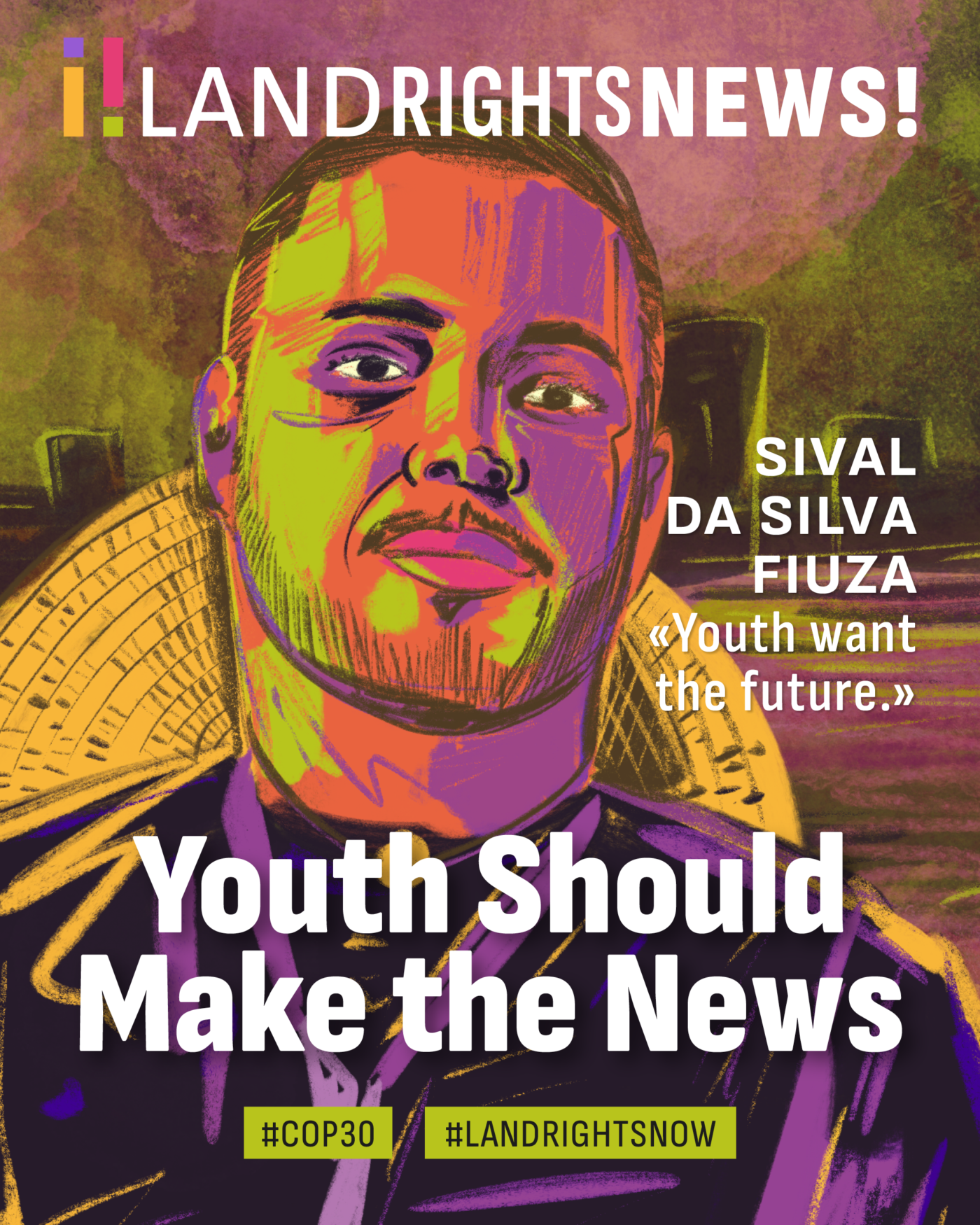
Sival da Silva Fiuza, Youth Defender of the Caatinga in Pernambuco, Brazil
“When people talk about the semi-arid, they think it’s just a place of poverty. Yes, there are many hardships. But our territory, the Caatinga, has so much to teach the world.”
At 22, Sival Fiuza is one of the few young people from his community choosing to stay, fight, and imagine a future rooted in the land.
He comes from Ponta da Serra, a traditional rural community in the municipality of Serra Talhada, in the state of Pernambuco, in Brazil’s semi-arid region. It is a place of red dirt roads, family roçados (small fields), and a deep, embodied knowledge of how to live with drought.
Their territory was recognized in 2013 by Fundação Cultural Palmares as a traditional Afro-descendant rural community – a qulimbo, but it has not yet been demarcated by INCRA, Brazil’s land reform agency. The land has been in his family’s hands for generations. There are no current land conflicts—but Sival knows that without legal guarantees, the future is uncertain.
A Territory of Belonging – and Abandonment
Sival grew up, learned to read, and built his life in Ponta da Serra. He never felt drawn to the city.
My experience with my territory is a connection. I was never very attached to the city. I grew up, studied, and was literate in my territory. I have a very strong bond with everything I’ve lived and continue to live there.
He loves: his family, the roçado where they grow their own food and the neighbors who share the same struggles and celebrations.
But life in Ponta da Serra is also shaped by state neglect.
“We are very limited in terms of public policies,” he explains. “Because we live in a rural area far from the city, policies often don’t reach us.”
Some examples:
- There is no health clinic in the community – for medical care, they must travel more than 20 km to the nearest district.
The roads are unpaved. - Services and social programs arrive late – or not at all.
The most basic things are collective achievements that depend on the community’s resilience.
Planting Food in a Drying Land
In this landscape, farming is survival.
His family plants beans, maize, and pumpkin or squash (jirimum), and they also raise a few animals such as chickens, pigs, and cattle, mainly for work and for food.
“We plant mostly for our own consumption. Buying beans – something so basic – is very expensive. When the harvest is good, when it’s a good year for rain, we can sell some too. But that’s very limited.”
The community is located in Brazil’s semi-arid region, where climate patterns have always been challenging. But climate change is intensifying those challenges.
The dryness, the scarcity of rain, and the lack of productive soil to grow our food – beans, corn – limit us a lot. This is one of the problems we suffer directly: the dry, arid climate in our region.
When the Elders Can No Longer Predict the Rain
For generations, local farmers relied on the knowledge of elders to guide planting:
“Before, the elders knew when it would rain,” Sival explains. “They would say: from November, the rains start. So we’ll plant in December to harvest in January or February.”
That wisdom allowed families to synchronize with the cycles of the land. Now, the climate has become so unstable that those cycles no longer hold.
“Today we can’t have that control anymore,” he says. “It’s getting harder and harder to know when to plant.”
The result is: crop losses, failed harvests and more uncertainty in communities already living close to the edge.
Around them, deforestation continues:
“People still have this habit of cutting down forest to open new roças,” he says.
In the Caatinga biome, fire is a constant risk.
The Caatinga is very strong in terms of fire, but also very fragile,” Sival explains. “If a fire starts on the hillside, it damages the whole community in a very frightening way.
Youth, Loneliness and Leadership
 Perhaps the hardest part of Sival’s work is that he is largely doing it alone—at least among young people in his community.
“Sometimes even the elders and my own relatives don’t recognize the work I’m doing for preservation, for continuity, for staying on our land,” he admits.
Many young people from Ponta da Serra don’t see a future there, they leave the community, build their families elsewhere and are disconnected from the territory.
“They don’t have this loving gaze toward the territory,” he says. “They prefer to leave and not look back. That hurts.”
When asked if there are other young people like him, organizing and defending the land, he responds with mixed feelings:
“In my territory, it’s just me on this front line of leadership, going after our rights as youth and as a community. As a person, that makes me happy. But at the same time, it makes me sad. I would like to have more companions in this struggle—companions of blood, of proximity.”
Still, over time, he has found allies beyond Ponta da Serra: other youth from the semi-arid region and from drylands around the world, who share similar realities.
The Semi-Arid as Teacher: Umbuzeiro, Juazeiro and Survival
Despite the hardships, Sival insists that the semi-arid and the Caatinga are not only places of suffering, but also of knowledge and resilience.
“Our region has a lot to teach the world,” he says. “We have many practices of conservation and ancestral knowledge in the Caatinga and across the semi-arid.”
He gives the example of the umbuzeiro tree, whose roots store water in an edible mass called cafofa. In times of severe drought, his parents and grandparents would dig up the cafofa to make sweets, to prepare fruit pulp, and even to drink the water stored inside it.
Another key tree is the juazeiro:
“The juazeiro is a tree that never dries out at any time of year, even with a dry climate and little rain,” he explains. “Because of trees like these, we can survive in our region.”
For Sival, these are not just botanical curiosities – they are lessons for climate adaptation:
- How to live with less water,
- How to maintain life in cycles of scarcity,
- How to respect and use native species instead of destroying them.
“When people talk about the Caatinga and the semi-arid, they think it’s only a place of poverty,” he says. “Yes, there are many adversities. But we are fighting for people to see the value of our territory. The semi-arid shouldn’t be seen only as a problem of the Northeast, but as something the whole world can learn from.”
From Ponta da Serra to COP: A Voice for the Semi-Arid
Sival is part of a semi-arid youth delegation that includes young people from Brazil’s Caatinga, the Corredor Seco in Central America, and the Gran Chaco in South America, all dry regions facing similar threats. Together, they are bringing the semi-arid to the center of global climate discussions.
“We are defending our territory, the semi-arid,” he says. “It’s a region that has a lot to teach the world.”
His demands at the COP30 include:
- Recognition of the Caatinga as a crucial biome for carbon absorption and climate regulation.
- Visibility for youth from drylands:
- Global attention to the risk that the Caatinga will become fully arid if destruction continues, and to the fact that it is a 100% Brazilian biome in extreme danger.
- “The youth are present. We want a future. We want change to happen. We want to show that our territory has a lot to teach.”
The Caatinga is uniquely Brazilian and at extreme risk of becoming an arid climate, of not being recognized at the global level,” he warns. “We want to show that our biome matters and that youth from the semi-arid are fighting for it.
From a small community without a health post, connected by dirt roads to a distant city, Sival Fiuza is standing up for a territory that many still ignore or pity.
He wants the world to see something else:
A place where people have learned, for generations, how to live with drought; where trees like umbuzeiro and juazeiro store water and life; where youth like him are refusing to abandon their land, even when it would be easier to leave.
In a warming world, Sival insists, the semi-arid is not a wasteland. It is a teacher.